

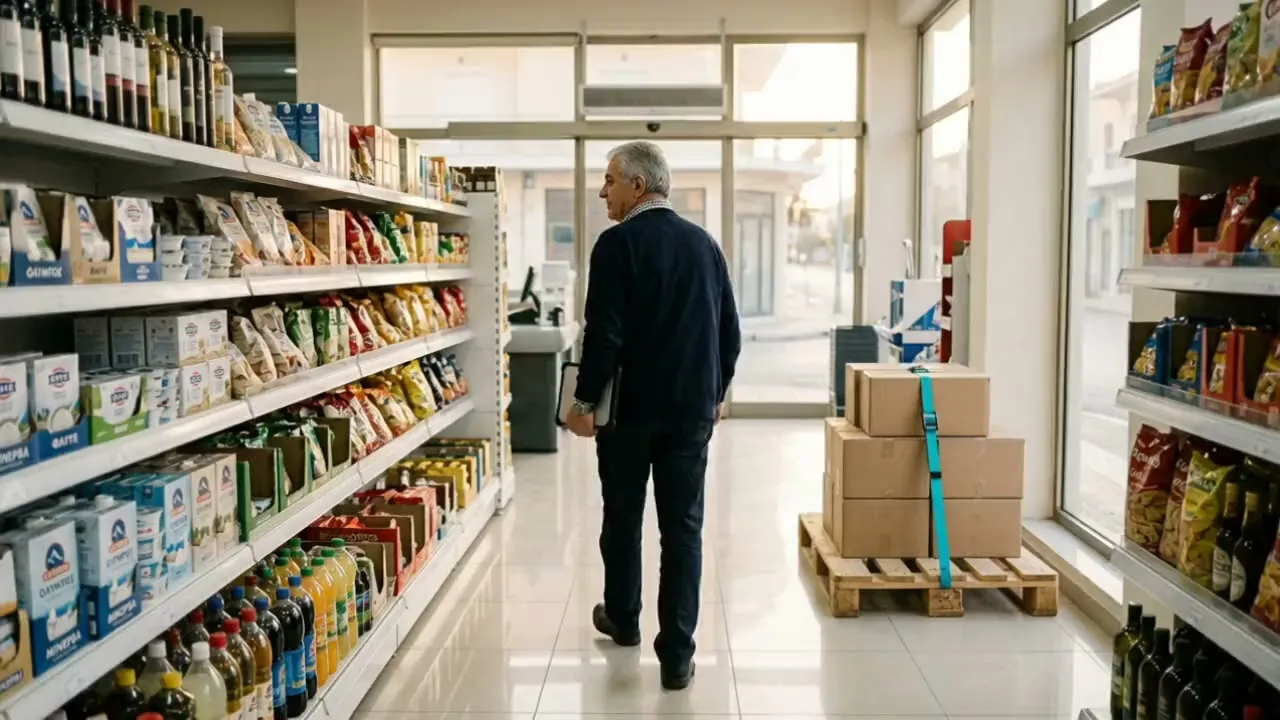
In an online shop, artificial intelligence (AI) helps mainly with four jobs: it answers customer questions, writes product descriptions, forecasts the stock you will need, and keeps orders, returns and paperwork in order. It does not bring customers by itself, and it does not fix a shop with high prices or slow delivery. Below we explain what each job looks like, which one to start with, and what to watch for.
1. Answers for customers, day and night
"Where is my order?", "When will it arrive?", "Can I exchange it?", "Which size should I take?". These are most of the questions an online shop receives. The answers already exist: in the order system, with the courier, and in the shop's terms.
An automatic chat assistant (a chatbot) gives these answers at once, on the website or in messages. What it does not know, it passes to a person: complaints, faulty products, special cases.
The benefit is double. The customer does not wait until morning, and you do not answer the same question fifty times. We explain how such an assistant works in our article about a hotel chatbot. The logic is the same.
2. Product descriptions, written quickly
If you have hundreds or thousands of products, descriptions are a job that never ends. AI writes a first text for each product from the supplier's data (dimensions, materials, use), in your shop's tone, in Greek and in English. A person reads, corrects and approves.
Watch two points:
- AI must not invent features that are not in the product data. This is why a person checks every text.
- Descriptions copied word for word from the supplier are the same in ten other shops. Your own text sets you apart, for the customer and for Google.
3. Stock: what will sell, and when
You ran out of the product everyone wants, while boxes that do not move sit in the warehouse. From your sales history, the season and your offers, a forecasting system shows how many units of each product you will need in the coming weeks, and how sure it is about the estimate.
The order to the supplier stays your decision. The system gives you better numbers to decide with. This is what our sales forecasting project does. You can see it on our projects page.
4. Orders, returns and paperwork in order
- Customer emails are sorted automatically: address change, cancellation, return, invoice request.
- Supplier invoices are read automatically and prepared for your accounting software.
- Return requests are checked against your terms and reach you with a suggestion, for example "within the deadline, can be approved".
You give the final approval.
Where to start
Choose the job that costs you the most today:
- If you answer messages all day, start with customer answers.
- If you have many products with poor or copied descriptions, start with descriptions.
- If you often run out, or you hold a lot of dead stock, start with forecasting.
- If you are lost in emails and papers, start with sorting.
One job at a time, with a small trial of a few weeks, and a measurement before and after.
What it does not do
AI does not replace what you know about your product and your customer. It does not fix high prices, slow delivery or bad photos. And it must not decide alone about refunds, discounts or replies to complaints.
What the law asks
The transparency rules of the European AI regulation have applied since August 2026. For an online shop, two points matter:
- The automatic assistant must say clearly that it is automatic and not a person.
- Images and video made with AI, which look real and could mislead, must be declared. If you show a product in a photo made with AI, say so.
Customer conversations also contain personal data, so the data protection rules apply. This text is information, not legal advice.
Common questions
Does it work with the shop I already have?
The well-known systems for online shops, such as Shopify and WooCommerce, offer a way to connect other software. For a shop built specially for you, it depends on how it was built. We check this before anything else.
Does the shop need to be large for this to be worth it?
No. It is worth it when one job repeats so often that it takes hours from you every week. A small shop with many customer messages gains more than a large shop with few.
Will customers know they are talking to a machine?
They must know from the start. The law asks for it too. What usually annoys a customer is not the automatic assistant. It is not being able to reach a person when they need one. This is why the hand-over to a person must always be available.
Where does my customers' data go?
Ask before you start: where conversations are stored, for how long, and who can see them. The assistant needs only the data the answer requires, for example the order number.
How we start
You tell us which job takes most of your hours in the shop. We look together at your real messages, products or sales, and we build a small trial in two to four weeks. We measure hours and errors before and after. We continue only if it works.
See how we build AI assistants with limits and human approval, or write to us about your own shop.